
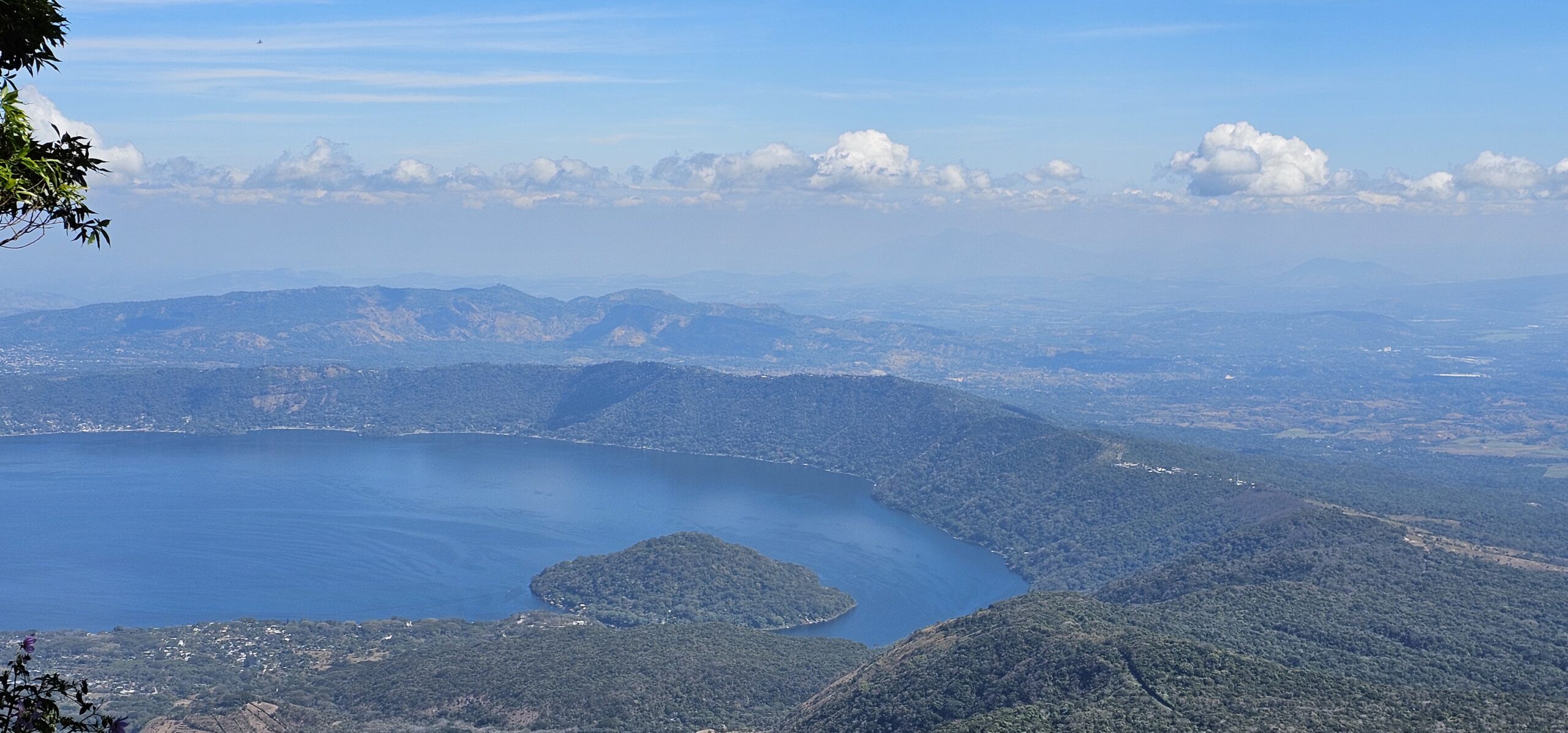
Somewhere on a comment thread under a video of this lake, someone types: “Wait did you just say volcanic crater lake? Nevermind.” Then they scroll on.
Fair reaction. Lake Coatepeque doesn’t look like a volcano. It looks like, well, a lake — a big, calm, mountain-ringed body of water about 40 minutes from San Salvador, in the Santa Ana area near the town of El Congo. No cone. No smoke. No obvious clue that you’re floating inside what used to be a hole in the earth.
So let’s actually go through what’s true, what’s exaggerated, and what nobody has fully figured out yet — because Coatepeque earns the “eighth wonder” nickname for reasons that are stranger than the postcard shots let on.
Myth #1: “It’s just a regular lake”
It’s not. Coatepeque sits inside a volcanic caldera that formed thousands of years ago — the whole basin is the leftover crater of an eruption large enough to swallow a mountain and leave a bowl behind. That’s also why the water runs warm in places: on the back side of the small island near the lake’s center, there are natural thermal springs, a direct souvenir of the volcanic plumbing still sitting underneath.
The name gives it away too, if you know where to look. Coatepeque comes from Náhuat, the language of the region’s original Pipil communities, roughly translating to “hill of the serpents” or “lagoon of the snake hill” — a name tied to old local legend, not a marketing team.
Myth #2: “The turquoise color is just a filter”
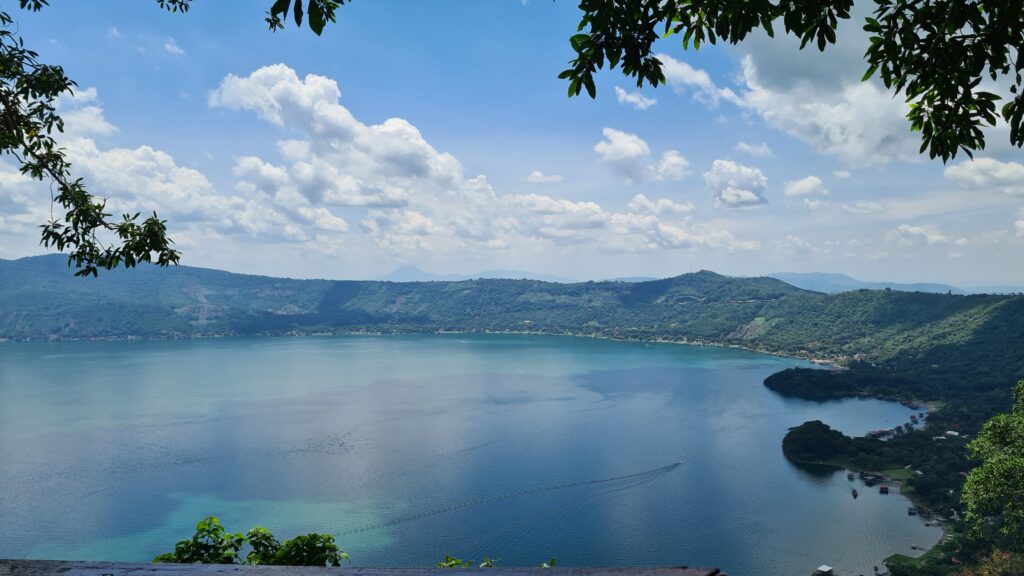
This is the one that trips people up most, because it sounds too good to be true. During certain times of year, the lake genuinely shifts to an intense turquoise — not edited, not staged. One longtime visitor in the comments describes loving the moment the water changes color as the afternoon fades into evening.
Here’s the honest part: nobody has a fully confirmed explanation. The leading theories point to microscopic algae blooms or shifts in the water’s mineral content, but it’s not settled science — which, if anything, makes it more interesting than a lake with a tidy Wikipedia-ready explanation.
Myth #3: “There’s no real history here, it’s just scenery”
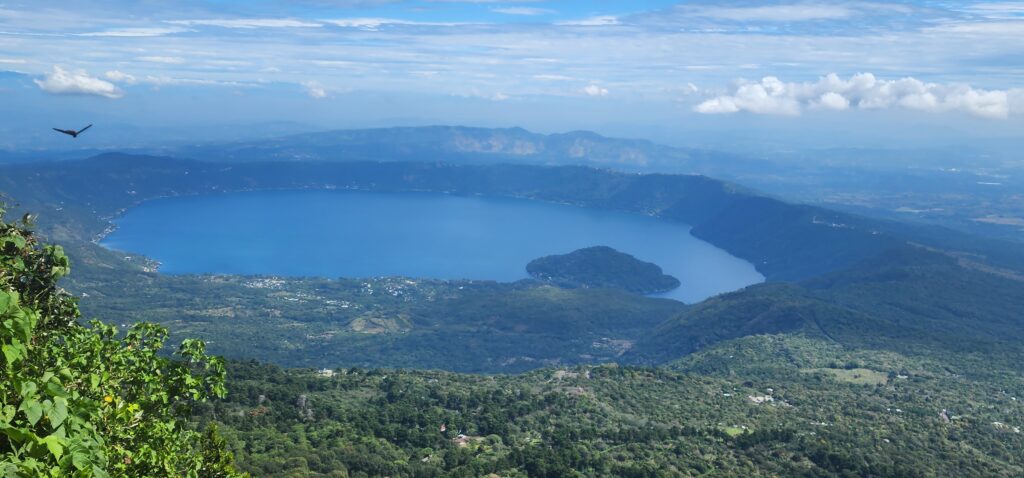
The small island at the center of the lake — known as Teopán, or Isla del Cerro — isn’t just a photo backdrop. Its name translates roughly to “place of the god,” and it’s believed to have served as a Pipil ceremonial site, where rituals and offerings once took place. It sits right next to those same thermal waters mentioned above, which is very likely not a coincidence — sacred sites in the region tend to cluster around features that already felt significant: fire, heat, water.
So the lake isn’t just scenic. It’s a live geology lesson wrapped around a place people considered holy long before anyone rented a jet ski there.
What people actually do once they’re on the water
On the water: kayaking and diving
Once you get past the origin story, Coatepeque is genuinely built for a full day out: kayaking, diving, water skiing, parasailing, and enough open water that the lake has hosted sailing competitions and has an international Ironman triathlon in the works. Boat options range from small rentals for couples to artisanal lanchas that carry groups of a dozen people, plus jet skis you can book by the half hour.
The drive into the crater
The drive in matters almost as much as the lake itself. The descent into the crater along the scenic route is dotted with roadside stops selling local fruit, regional coffee, and wine — plus at least one lookout point worth the extra five minutes out of the car.
Where to stay
For staying over, options near the lake include small hotels with pools and lakefront restaurant terraces, plus a solid stretch of Airbnb houses if you’d rather have your own space and view. On the food side, several lakefront spots specialize in local dishes and grilled meats, right on the water.
What visitors say
One visiting American exchange student, on his first trip to El Salvador, put it simply: eating pupusas on the first night here may have been the best part of the whole trip — high praise from someone who’d also just been to the beach that week.
Reader Questions, Answered
Where exactly is this lake?
It’s in the Santa Ana area, close to the town of El Congo, roughly a 40-minute drive from San Salvador — part of what makes it an easy day trip rather than a full expedition.
How much do the boats and jet skis actually cost?
There’s no single fixed price — rentals vary depending on the type of boat, how long you book it for, and the season you’re visiting in. Half-hour jet ski rentals are available if you just want a taste, and larger boats can be booked for bigger groups.
What about life jackets on the boat trips?
A fair concern, and one worth asking directly when you book. Specific safety-equipment policies aren’t detailed here, so if you’re heading out with kids or non-swimmers, it’s worth confirming life jacket availability with whichever boat or jet ski operator you go with before you leave the dock.
Coatepeque doesn’t need the volcano story to be worth a day trip. But once you know you’re floating in an old crater, next to a sacred island, over water that still can’t fully explain its own color — it’s hard to look at it as just another pretty lake.
Comments are closed