
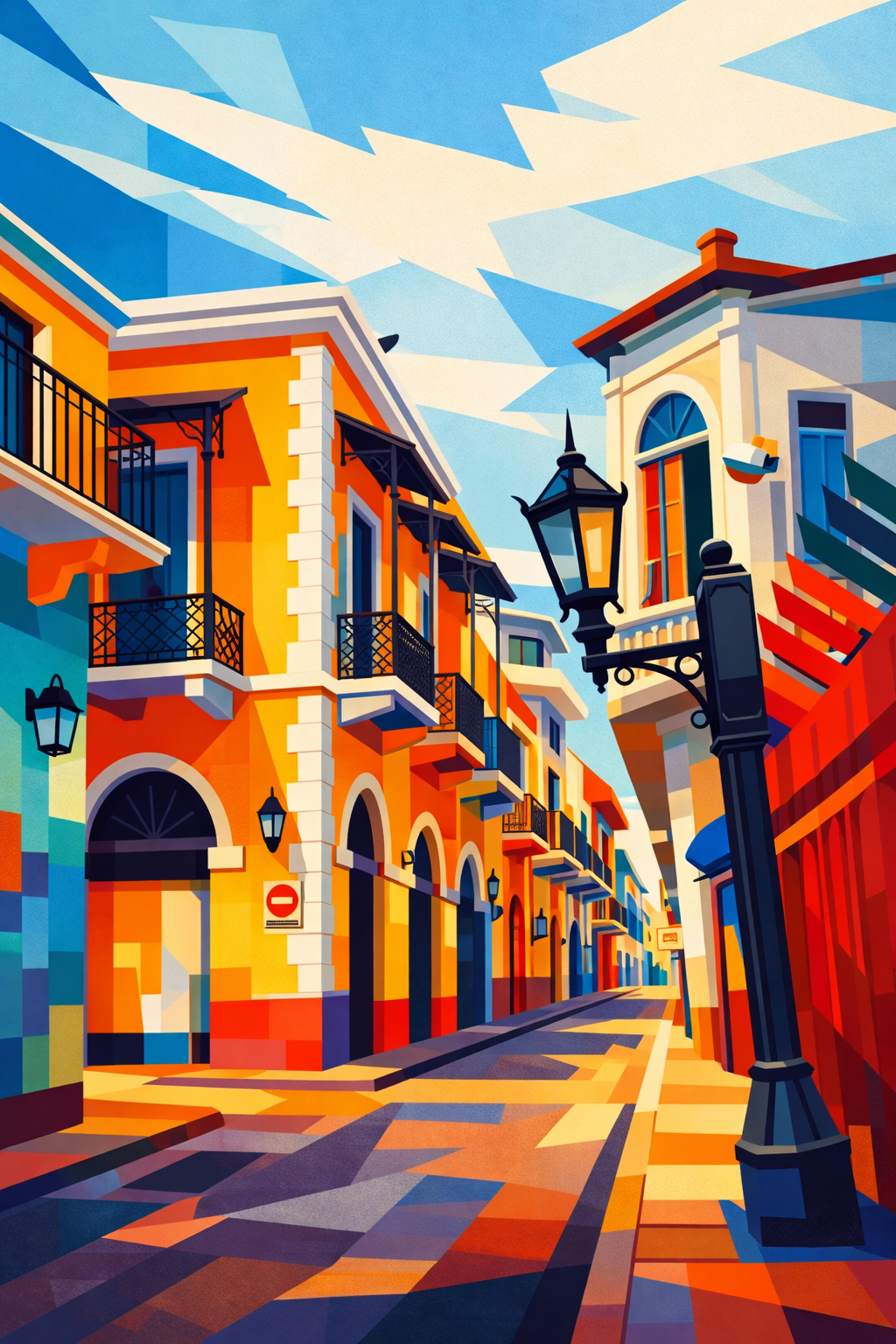
Panama City has a branding problem. Say the name and most people picture the canal — a line of cargo ships easing through locks, the kind of image that ends up on a postcard before you’ve even landed. What almost nobody pictures is the other Panama City: a compact colonial quarter of restored facades, tucked-away plazas, and crumbling buildings still waiting their turn, sitting close enough to a national park that you can go from cobblestones to rainforest canopy in a twenty-minute drive.
That gap between the postcard and the reality is exactly where the myths live. Here are three the internet keeps getting wrong.
Myth #1: The “Panama hat” is Panamanian
This one shows up in the comment section of pretty much every Panama travel video, and for good reason — it’s genuinely confusing. The woven hat that tourists buy and call a “Panama hat” is not actually from Panama. It’s Ecuadorian. The hat that’s actually native to Panama looks different, and it has its own name: sombrero pintao (“the painted hat”), traditionally worn with the equally iconic pollera dress.
If a vendor near a raspado stand hands you the classic wide-brim straw hat, you’re holding a piece of Ecuador, not Panama — charming, but misattributed. The real thing takes more explaining and honestly deserves more attention than it gets.
Myth #2: The pirate destroyed the old city
Every version of the Panama Viejo story mentions the same villain: Captain Henry Morgan, pirate, arriving to sack the first Spanish city on the Pacific coast in the 1600s. It’s a great story. It also skips the part where the city’s own governor, facing an unwinnable defense, may have ordered it burned rather than let it fall intact — a detail that turns “pirate destroys city” into something closer to scorched-earth strategy by the people defending it.
Historians still argue over exactly who lit the match and when. What’s not in dispute: the ruins of that first city sit about 13 kilometers from where the Spanish rebuilt in 1673, on ground that was easier to defend — which is the Casco Antiguo you’d actually be walking through today.
That rebuilt city didn’t get an easy second act either. At least two major fires tore through it after the 1673 founding, which is why so little from that original settlement survives — a handful of ruins, including the shell of the Santo Domingo church, is about what’s left.
Myth #3: There’s nothing here but the canal
If your itinerary is “see the canal, go home,” you’re doing what most visitors do — and skipping the thing locals keep bringing up instead. Twenty minutes outside the old city sits Soberanía National Park, a protected stretch of rainforest along the canal’s edge, dense enough to hold more than 1,300 plant species, 500 bird species, and around a hundred kinds of mammals.
You can kayak the Chagres River there. It’s one of the few places on earth where a UNESCO-worthy colonial quarter and a genuine tropical rainforest are close enough to visit in the same afternoon, which is a stranger and more interesting fact than “there’s a canal.”
And even within the old city, the checklist misses things. The building now known as the Central Hotel — grand, restored, dating back to the 1870s — was once the most fashionable address in the capital and still carries that presence, minus the neon. The rehabilitation program working through the neighborhood block by block means some corners already look like a postcard and others are still mid-repair, which is its own kind of interesting if you like watching a place mid-transformation rather than finished.
What people actually asked
Is the hat thing really true?
Yes — repeatedly, in the comments, by people who clearly know the difference. The confusion is old and widespread enough that it’s basically its own tradition at this point.
Who actually burned Panama Viejo — Morgan or the Spanish themselves?
The honest answer is that both accounts exist, and even people from Panama disagree on the details in the same comment thread. Morgan’s raid is the headline; whether the governor ordered the burn before the pirates arrived is the part historians still debate.
What's worth doing that isn't the canal?
San Blas comes up often — it’s not part of the old-city walking tour, but it’s the kind of side trip locals mention almost automatically when a visitor says they’ve “done Panama.”
Is the old city actually walkable and worth a full day, or a quick stop?
Between the plazas (Plaza de Herrera is one of the more popular ones), the ruins, the restored blocks, and the fact that the rainforest is a short drive away, it holds up as more than a photo-op detour — it’s a place people come back to.
Panama City rewards the traveler willing to see past the canal — the old city, the myths surrounding it, and the jungle sitting quietly just beyond its edges.
Comments are closed