
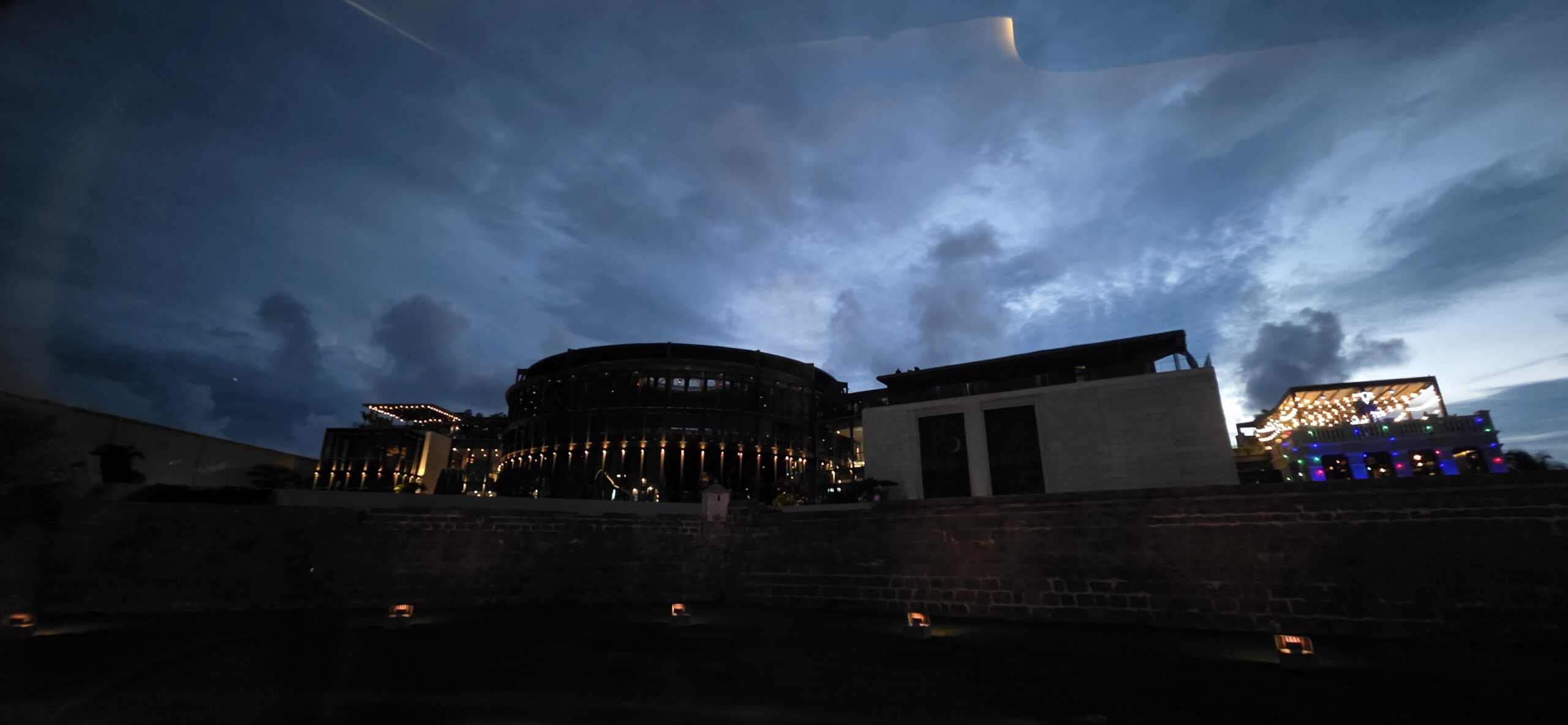
Inside Cartagena’s Most Luxurious Mall — Built on a 19th-Century Bullring
Walk into most shopping centers in a colonial city like Cartagena and you brace yourself for the usual mismatch: loud storefronts, blaring promotions, and a design that feels bolted onto the old town rather than part of it. That’s the assumption I carried through the walls of Cartagena’s historic center, past the heat and the crowds, toward a glass revolving door I’d heard about but hadn’t quite believed. What’s actually inside flips that expectation completely.
A Bullring Before It Was a Mall
Long before anyone imagined an emerald counter next to a Cartier boutique here, this ground was the Plaza de la Cerrezuela, a bullring and theater dating back to 1893. It survived the War of a Thousand Days, got rebuilt, and was declared a national monument in 1995 — and then, like a lot of grand old buildings, it slowly slipped into disuse. Nobody touched it again until 2013, when a group of investors decided the plaza deserved more than restoration; they wanted to reimagine it entirely. Construction started in 2015 and dragged through narrow colonial streets and 500-year-old houses before the doors finally opened in 2019. Two years later, the project won an international design award.
That history is why the place doesn’t feel like a shopping center dropped into the walled city. It feels like the walled city grew a new room.
No Neon, No Noise
Step past the entrance and the first thing that hits you isn’t a store — it’s the quiet. The lighting is dim and warm rather than fluorescent, there’s no shouting signage, and the color palette sticks to earth tones and white throughout. The layout is circular, built around escalators, with the jewelry counters and Cartier-level brands positioned right at the entrance so the first impression does the talking. Carolina Herrera and Purificación García — a name that carries real weight on Colombia’s coast — sit among the designer storefronts, alongside cases of summer accessories that feel tailored to the city outside rather than generic.
Even the sale signs stay small and understated. Nothing gets the big-box treatment here.
A Miniature Cartagena, Lit Up Room by Room
Tucked between the corridors is a scale model of the historic center — every plaza, every church, every museum rendered in miniature. Press a small button and the corresponding building lights up on the model. It’s a strange, charming pause in the middle of a luxury shopping trip, and I lingered there longer than I expected to.
Floor by Floor
The second floor keeps the jewelry-and-watches energy going, adds makeup counters, and — unexpectedly — a storefront booking yacht experiences. Hugo Boss, Adidas, and Bimba y Lola (whose bags are worth a detour on their own) round out a floor light on quantity but heavy on quality; nothing here feels like filler. By the third floor, it’s international cafés, steakhouses, and terraces looking straight out at the city walls — plus a Mario Hernández storefront with an entrance dramatic enough to stop foot traffic.
Arena: The Rooftop That Isn’t Really Indoors
The real surprise is Arena, an open-air plaza with no air conditioning — just ceiling fans and open sky, and somehow the climate up there felt better for it. Artisan stalls, cafés, and food stands ring the edges while tourists sit around talking and taking photos. At night, water shoots up from circles set into the floor and choreographs itself to music in a small, genuinely magical light show.
If you’re walking Cartagena’s walled city before or after a stop like this, it’s worth doing it properly rather than rushing between landmarks — a self-guided walking tour of Cartagena’s old town lets you move at your own pace between the plazas and churches the mall’s miniature model only hints at, with the history filled in as you go.
The Numbers Behind the Polish
A small storefront here rents for somewhere between 8 and 15 million pesos a month; a large one runs 30 to 50 million. Around 200,000 people pass through monthly, most of them foreign tourists — which explains the valet parking, tax-free shopping, luggage storage, and the level of polish applied to every corner. This isn’t a mall built primarily for locals doing errands; it’s built for visitors who’d otherwise be spending that money somewhere else in the city.
The Details That Make It Feel Alive
Live music drifts in from somewhere unseen as you walk. Jellyfish-shaped sculptures seem to float overhead, and the bridges connecting sections have a slight, deliberate vibration underfoot, held up by visible metal beams. None of it feels accidental.
I ended up on one of the upper terraces with something to eat, warm light overhead, a breeze moving through, and the city walls in view. Small, but substantial. Elegant, but not cold. Touristy, in the sense that it’s built for visitors — but with genuine character underneath. Of everywhere I’ve shopped in Cartagena, this is the one I’d send someone back to.
This post contains affiliate links. If you book through them, we may earn a small commission at no extra cost to you.