
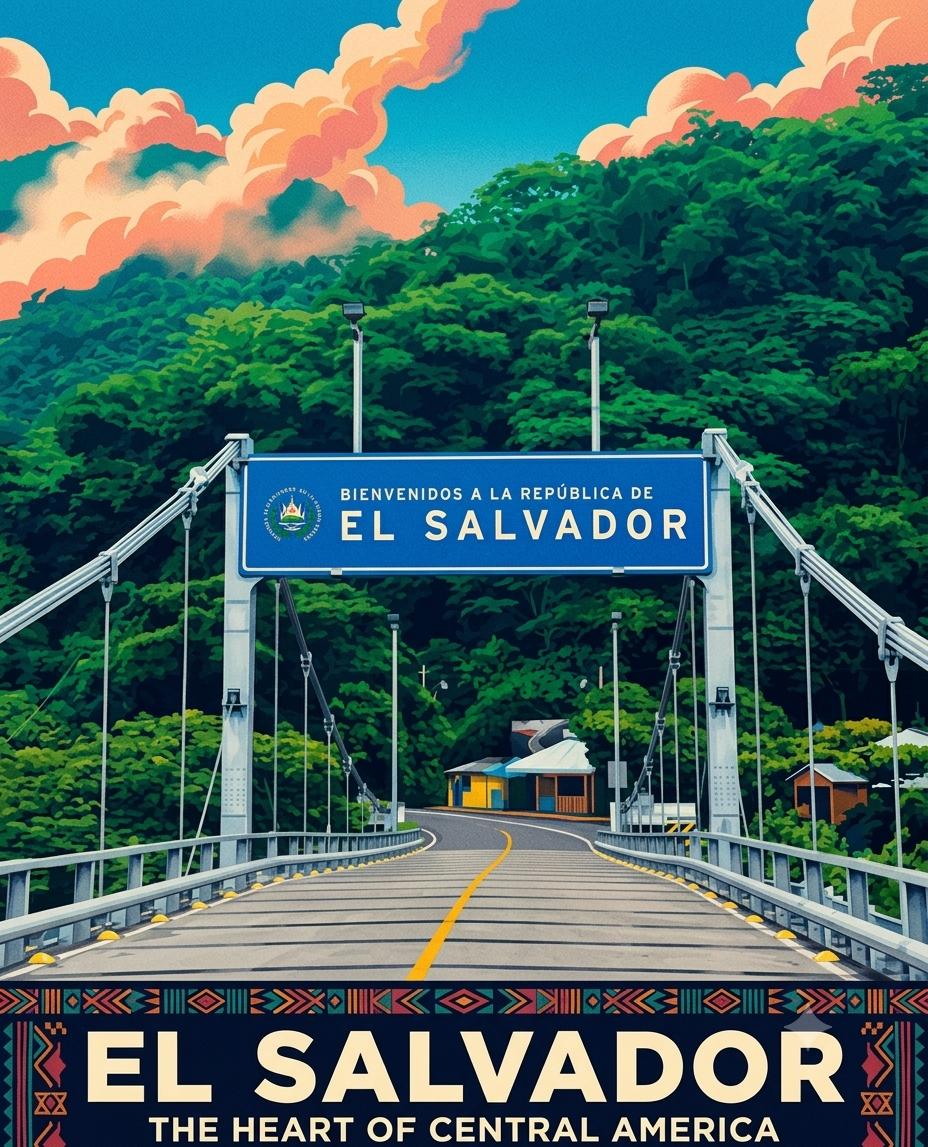
Frontera Las Chinamas is the primary crossing point over the Río Paz on the CA-8 highway, forming the natural entry to Ahuachapán and the Ruta de las Flores region. The site functions as both a border checkpoint and a rest stop with food, lodging, and recreation. The climate here is temperate, and the community has built a reputation for efficient service and authentic regional cuisine that draws both domestic and international travelers.
Quick Answer: Frontera Las Chinamas offers fast, organized migration procedures; excellent local food (pupusas, soups, grilled meats) at $3–$5 per meal; pools and water activities; and lodging from $10–$150 depending on comfort level. Most travelers spend 1–3 hours here or stay overnight as a strategic stop on the Ruta de las Flores.
| Category | Details |
|---|---|
| How to Get There | CA-8 highway; public buses (less than $1.50), tourist shuttles ($20–$40), or private transfer via Uber or pre-booked car |
| Estimated Budget per Day | $25–$50 (meals $3–$18, lodging $10–$60, water activities and entry fees) |
| Best Transport Onsite | Walking between restaurants and facilities; shuttles depart for nearby towns; buses to Santa Ana or La Libertad from the stop |
How long does the migration process take at Frontera Las Chinamas?
The community consistently highlights that migration paperwork at Las Chinamas is fast and well-organized compared to other Central American crossings. Travelers report smooth processing and friendly officials. However, exact wait times depend on traffic volume and day of the week, so our reporting today does not have verified average processing times.
The crossing handles both vehicle and pedestrian traffic. If you are driving, have your passport, vehicle registration, and insurance documents ready. Pedestrians should carry a valid passport or national ID and be prepared for routine document checks.
What food and restaurants are available at the border?
Frontera Las Chinamas is widely praised in traveler reviews for exceptional regional cuisine at low prices. The food scene focuses on authentic Salvadoran comfort fare rather than tourist fare.
Pupusas and Local Comedores
Traditional pupusas (revueltas, cheese, bean-filled rounds) cost $0.50–$1.25 each. Specialty versions with garlic or shrimp run slightly higher. A meal of two pupusas with a beverage rounds to $3.00—among the cheapest eating on the highway. Local comedores (small dining halls) serve set lunches for $3–$5.
Grilled Meats and Soups
The community praises the parrilladas (grilled meat plates) and traditional soups. These sit in the mid-range ($10–$18) but are filling and flavorful. Beverages include local beers (Pilsener, Suprema) at $1.50–$3.00 in restaurants, or specialty coffee from nearby Ruta de las Flores fincas for $2–$4.50.
What activities and entertainment are available for families?
Travelers consistently highlight the variety of family-friendly activities, which justify a stop even if migration takes only an hour. The focus is on water-based recreation and open-air dining.
Pools and Water Sports
Several establishments at and near the border offer swimming pools and water activities. The community notes these as a major draw for families during warm days. Some visitors suggest that additional pools would enhance the offering, but current facilities are well-regarded. Our reporting today does not have individual entry fees for each pool.
Casual Recreation and Dining
Beyond water activities, the border hub functions as a family-friendly social space. Open-air seating, views of the natural landscape with pine forests, and casual games (outdoor games and sports) occupy visitors waiting for vehicles or simply taking a break. The community notes the beautiful natural setting and welcoming atmosphere as reasons families linger longer than strictly necessary.
Where can you stay overnight at Frontera Las Chinamas?
Budget travelers often base themselves in nearby towns like San Salvador or the beach at Playa El Tunco and pass through the border during daytime.Usually they do not seek accomodations there. However, some lodging exists at the border itself and in immediate surrounding areas.
Budget Lodging ($10–$15)
Shared dormitory beds in hostels near the border area run $10–$15 per night. Some include basic breakfast. This tier is practical for overland travelers moving quickly through Central America.
Mid-Range Lodging ($35–$60)
Private rooms with air conditioning—essential in the lowland heat—occupy the $35–$60 range. Small hotels and Airbnb options in nearby towns offer comfort without the cost of resort lodging.
Upscale Options ($90–$150)
Boutique hotels and higher-end accommodations near the coast or in exclusive neighborhoods of San Salvador start at $90–$150 per night. These are weekend escapes rather than border-area lodging, but within easy reach via shuttle or car.
What is the climate and best time to visit Frontera Las Chinamas?
The region has a temperate climate typical of El Salvador’s western highlands transitioning to lower elevation. Temperatures are warm year-round, with slightly cooler air than coastal areas. Rainfall occurs during the rainy season (May–October), and the dry season runs November–April.
Because the border serves as a transit point rather than a destination, it is functional year-round. However, family activities like pools are most enjoyable during the dry season when weather is predictable. If you are passing through during rainy months, expect possible traffic delays on the CA-8 but no closure of the crossing.
How do you get to Frontera Las Chinamas from major cities?
Frontera Las Chinamas lies on the CA-8, the main highway connecting the capital to western El Salvador and Guatemala. Several transport options serve different budgets and comfort levels.
Public Buses
Local public buses (Ruta 102 toward La Libertad, Ruta 201 toward Santa Ana) pass the border area and cost less than $1.50. These operate during daylight hours only; the last buses typically depart by 5:00–6:00 PM. Bring exact change in colones or dollar bills. This is the cheapest option but not recommended for solo travelers unfamiliar with the system or for those with heavy luggage.
Tourist Shuttles
Shared tourist shuttles ($20–$40) connect the border to towns like El Tunco, Santa Ana, and Antigua Guatemala. These are direct, safe, and air-conditioned, making them ideal for independent travelers who want to skip the complexity of the public bus system.
Ride-Hailing and Private Transfer
Uber operates reliably in San Salvador and Santa Tecla, and you can book rides from the capital region to the border area. For a more personalized experience, pre-booked private transfers via airport transfer services provide door-to-door convenience, especially useful if you are arriving from the capital’s airport or traveling with family.
How safe is Frontera Las Chinamas and the surrounding area?
El Salvador has seen dramatic security improvements in recent years. The tourist zones of El Salvador, including the western regions near the border and the Ruta de las Flores, are considered safe for travelers who exercise standard precautions. The border checkpoint itself is heavily staffed and secure.
Keep valuables out of sight, avoid walking alone in unfamiliar rural areas after dark, and use caution on crowded buses where pickpocketing is possible. The communities at Frontera Las Chinamas are accustomed to foreign travelers and generally welcoming.
For connectivity, a mobile eSIM or prepaid SIM card costs $5–$10 and includes 7–15 days of data. You will need your passport to purchase a local chip. Claro and Tigo are the main providers, and both have coverage throughout the region.
This post contains affiliate links. If you book through them, we may earn a small commission at no extra cost to you.
Comments are closed